
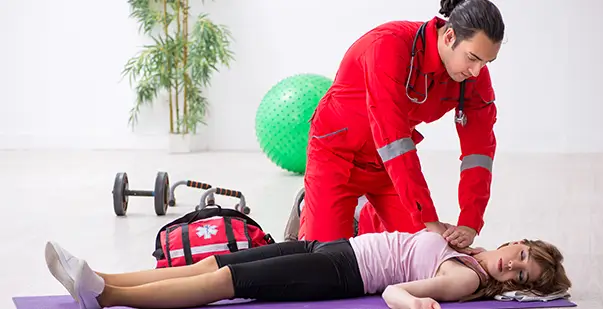
Cardiopulmonary resuscitation (CPR) is a life-saving technique used in emergencies when a person’s breathing or heartbeat has stopped. It is often performed in situations like cardiac arrest, drowning, or choking, where immediate action is crucial for survival CPR Instructor Course. The primary goal of CPR is to restore blood circulation and breathing until professional medical help arrives. Knowing how to perform CPR can make the difference between life and death, making CPR training essential for both healthcare professionals and laypersons.
CPR training teaches individuals the correct techniques to perform chest compressions and rescue breaths, two key components of CPR. Chest compressions help to manually pump blood through the heart, maintaining circulation to vital organs like the brain. Rescue breaths provide oxygen to the lungs when normal breathing has stopped. Together, these actions mimic the body’s natural processes, buying time until the heart can be restarted or other medical interventions can be administered.
The first step in CPR is to assess the situation. Before administering CPR, it is important to check if the scene is safe for both the rescuer and the victim. This includes ensuring there are no hazards, such as traffic or fire, that could endanger either party. Next, the rescuer should check the victim’s responsiveness by tapping them on the shoulder and shouting to see if they are conscious. If there is no response, CPR should be initiated immediately.
Chest compressions are the foundation of CPR and must be done correctly to be effective. During training, individuals learn the proper hand placement, depth, and rate for chest compressions. The hands should be placed on the center of the chest, between the nipples, with the heel of one hand on top of the other. Compress the chest at least two inches deep for adults, and the compression rate should be between 100 to 120 compressions per minute. CPR training emphasizes the importance of allowing the chest to fully recoil between compressions, as this helps the heart to refill with blood and improves circulation.
Rescue breaths are the second crucial component of CPR. After 30 chest compressions, two rescue breaths should be given. To deliver a rescue breath, the rescuer tilts the victim’s head back slightly to open the airway, pinches the nose shut, and breathes into the victim’s mouth until the chest rises. Each breath should last about one second. CPR training highlights the importance of avoiding over-inflation, as breathing too forcefully can cause air to enter the stomach rather than the lungs.
Automated External Defibrillators (AEDs) are often part of CPR training because they can greatly increase the chances of survival during cardiac arrest. AEDs are portable devices that can detect irregular heart rhythms and deliver an electric shock to restore normal heart function. CPR training teaches how to use an AED in conjunction with chest compressions and rescue breaths. The AED provides voice prompts that guide the rescuer through the process, making it user-friendly even for those with minimal training.
CPR training also covers special considerations for different populations, such as children and infants. The techniques for infants and children differ slightly, as their bodies are smaller and more fragile. For example, chest compressions on infants are performed using two fingers instead of the full hand, and the depth of compression is reduced to about 1. 5 inches. Rescue breaths are also gentler, as their lungs require less air.
In conclusion, CPR training equips individuals with the skills and confidence to act quickly and effectively in emergency situations. By understanding the proper techniques for chest compressions, rescue breaths, and the use of AEDs, trained individuals can help increase the chances of survival for victims of cardiac arrest and other life-threatening situations. Regular CPR training ensures that these life-saving skills are fresh and can be performed correctly when needed most.